Two new fellowships were awarded in the 23rd call in April 2026
The Board and Research Committee have awarded two new HRSMC Fellowships as a result of the 2026-1 call.
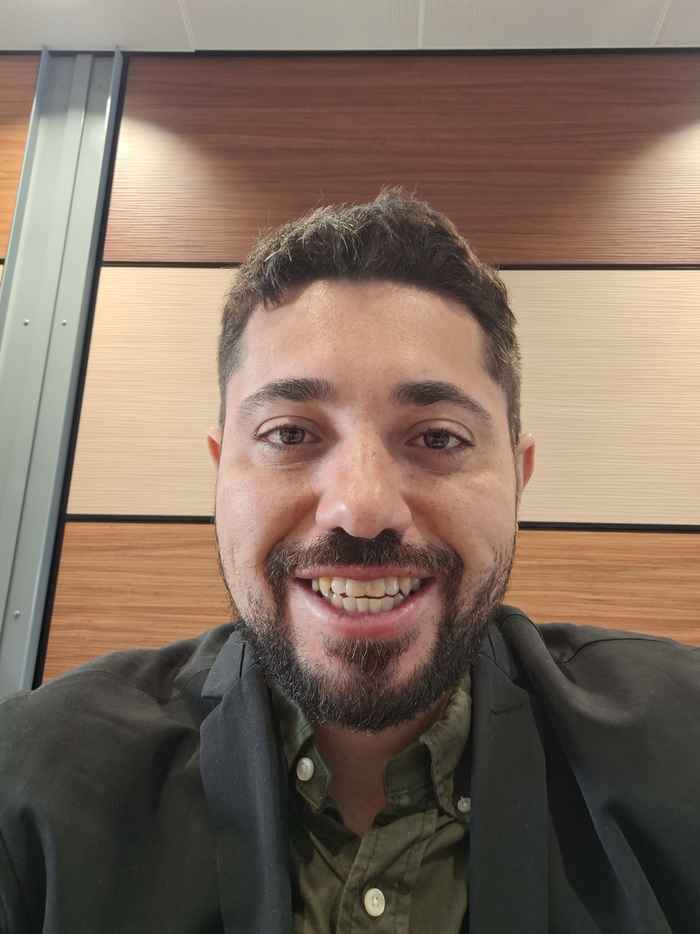
Computational study of reactivity and NMR spectroscopy of platinum complexes
Guest: Prof. Dr. Diego Fernando da Silva Paschoal, Multidisciplinary Institute of Chemistry, Multidisciplinary Center UFRJ-Macaé, Federal University of Rio de Janeiro, Macaé – RJ, Brazil.
Hosted by: Prof. Dr. C. Fonseca Guerra (VU) and Prof. Dr. F. Matthias Bickelhaupt (VU)
A visit of 2 month
During his visit to the TheoCheM group at the Vrije Universiteit Amsterdam, Dr. Diego Paschoal will investigate how variations in platinum-coordinated ligands affect both the 195Pt NMR properties and the interaction of platinum complexes with DNA, the primary biological target of platinum-based anticancer drugs.
Dr. Paschoal brings expertise in the study of transition-metal complexes and heavy-atom NMR spectroscopy, with a particular focus on platinum compounds of medicinal relevance. The visit aims to combine this expertise with the advanced methodologies in chemical bonding and reactivity analysis developed by the groups of Dr. Célia Fonseca Guerra and Prof. F. Matthias Bickelhaupt.
This collaboration will establish a multidisciplinary framework for exploring the relationship between electronic structure, spectroscopic behavior, and biological activity in platinum complexes, contributing to a deeper understanding of the factors governing their anticancer activity.
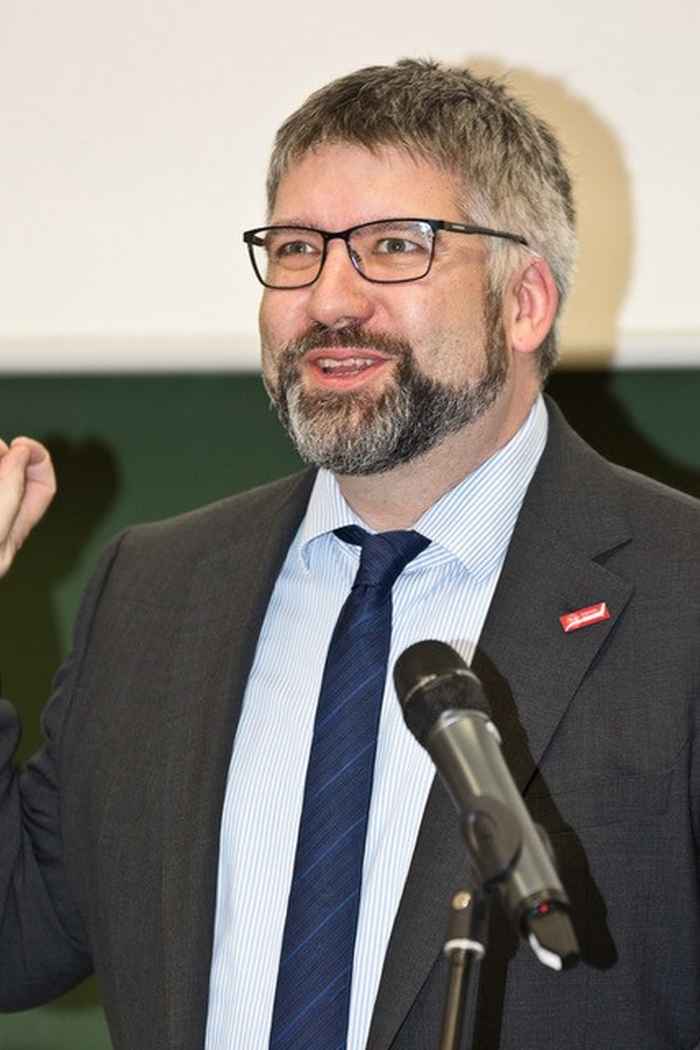
Uncertainty Quantification for Density Functional Theory and Beyond
Guest: Prof. Dr. Christoph Jacob, Technische Universität Braunschweig, Institute of Physical and Theoretical Chemistry, Germany
Hosted by: Prof. dr. Lucas Visscher (VU)
A visit of 3 weeks
During his visit at VU Amsterdam, Prof. Christoph Jacob will work with Prof. Lucas Visscher’s group on new ways to make quantum-chemical predictions more reliable. The project focuses on uncertainty quantification: methods that estimate how strongly calculated properties such as energies or spectroscopic parameters may be affected by approximations in the underlying computational model. In particular, the collaboration will study uncertainties related to basis-set extrapolation and to kinetic-energy functionals used in subsystem density functional theory, and explore how uncertainty quantification can be integrated into computational workflows for high-throughput quantum chemistry.
Prof. Jacob brings expertise in uncertainty quantification in quantum chemistry, alongside longstanding work in subsystem density functional theory and workflow development. These topics build on a long-standing collaboration between Braunschweig and Amsterdam, rooted in shared interests that go back to Prof. Jacob’s PhD work at VU Amsterdam. The project aims to develop practical strategies to attach confidence estimates to quantum-chemical results, supporting more robust comparison between theory and experiment, improved computational screening, and more reliable data for AI-based chemical modelling.